

Technical Paper
MLCC cracks matter when the fracture path explains the electrical failure.
Flex cracking in multilayer ceramic capacitors can produce leakage, reduced insulation resistance, or hard shorts when the fracture intersects active plates or bridges opposite-polarity electrodes. The useful analysis question is whether the crack location, propagation path, and process context all support the same failure sequence.
Source basis
This paper restructures selected SEM Lab MLCC failure-analysis records into a
9-page paid technical reference. Case numbers are retained for traceability, but
customer-specific details are omitted.
Overview
Multilayer ceramic capacitors are brittle ceramic components constrained by solder joints, terminations, and the printed circuit board. Board bending, depanelization, breakout operations, handling, or assembly-level mechanical loading can create ceramic fractures near the termination regions.
The paper emphasizes evidence discipline. A cracked capacitor is not automatically a flex-crack failure. The strongest conclusions connect the fracture path to the electrical symptom and distinguish bending damage from manufacturing-related ceramic defects, fabrication voiding, contamination, or unrelated electrical damage.
Key Takeaways
- External inspection can miss cracked MLCCs; microsectioning may be required.
- Multiple polishing planes can be needed to prove crack continuity and active-plate intersection.
- The strongest cases show cracks bridging opposite-polarity electrodes or coinciding with short sites.
- Depanelization, board breakout, board-edge proximity, and handling are recurring risk contexts.
- Boundary cases help separate true flex cracking from knit-line, firing-crack, or voiding mechanisms.
What The PDF Includes
- Evidence grading for direct, supporting, inferred, and control cases
- Representative case table covering SLI-1578, SLI-2024, SLI-2963, SLI-1149, SLI-1580, SLI-2091, SLI-1654, and SLI-1636
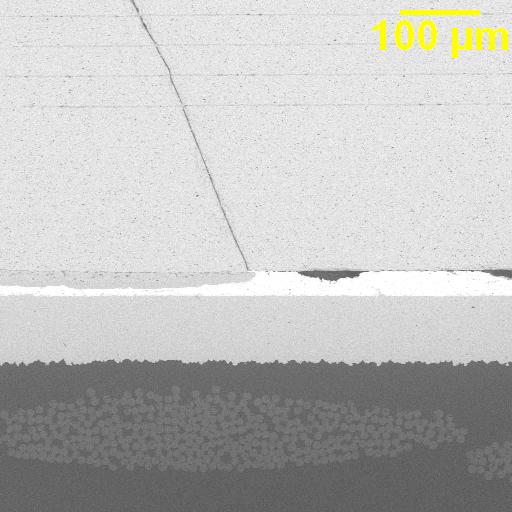
- Four MLCC microsection figures from SEM Lab report image records
- Guidance on polishing-plane strategy and electrical relevance
- Practical review actions for placement, depanelization, handling, and failure-analysis planning
Best Fit
This paper is most useful for reliability engineers, failure-analysis engineers, manufacturing engineers, and quality teams reviewing cracked or shorted MLCCs, depanelization risk, board-flexure complaints, or capacitor failures near board edges and high-strain regions.
Conclusion
MLCC bending and flexure fracture is a well-supported failure mechanism when the crack path, electrical symptom, and mechanical context align. The practical lesson is to determine whether the crack explains the failure, not simply whether a crack exists.
Paid Technical Paper
Need a compact reference for MLCC flex-crack interpretation?
Purchase the 9-page PDF for the full technical paper, or submit SEM images, microsection photos, electrical symptoms, and assembly context for a focused written review of a specific MLCC failure.