Case 947 · Public preview
Exposed Brass and Interfacial Fracture Can Implicate a Switch Lead's Nickel Barrier
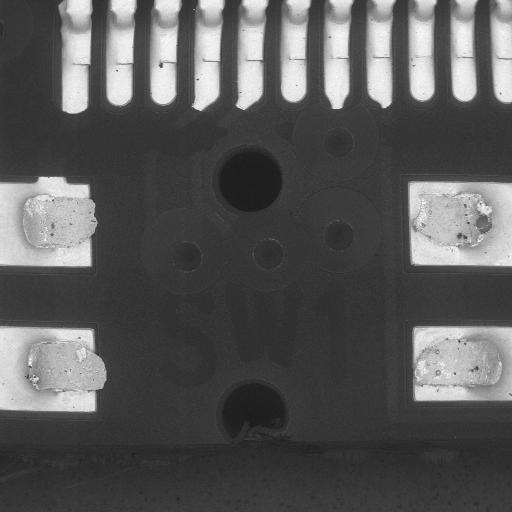
Switches separated from three circuit assemblies after failure of their solder joints. Both board-side and component-side fracture surfaces were available for analysis.
Fracture-surface examinationBSE SEMEDSElemental mappingOpposing-surface comparison
What the evidence preview establishes
The failures were attributed to deficient lead-finish integrity, most likely an insufficient or poorly adhered nickel barrier over brass. Interfacial fracture near the base metal, mixed nickel-tin and copper-tin reaction products, and exposed copper-zinc material supported a plating-related weakness.
Why this case matters
Examine both sides of a detached component's solder joints. Exposed brass on the lead and plating-related reaction products on the board can identify a weak lead finish; section unused parts to verify the barrier thickness and layer sequence before choosing a corrective action.
Full evidence reserved for MEMBER and STOREThe complete case includes the evidence sequence, 5 interpreted figures, alternative explanations, limitations, and practical application guidance.