Case 1340 · Public preview
Localized Bond-Pad Corrosion Can Produce Internal Opens
Two memory devices failed to read or write, with electrical checks indicating open or high-impedance input/output paths.
Electrical testingChemical decapsulationOptical microscopySEMEDSElemental mapping
What the evidence preview establishes
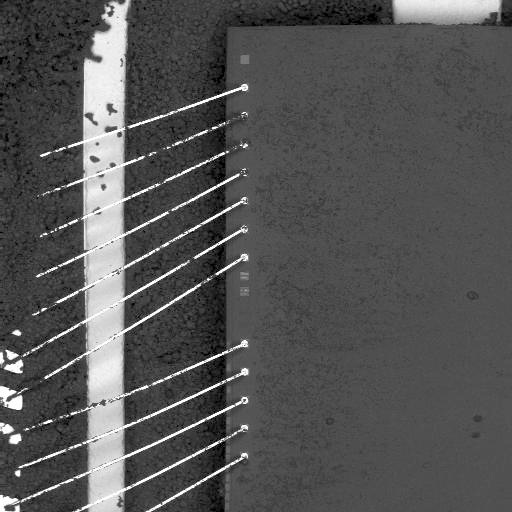
Localized corrosion removed aluminum from active die bond pads and exposed the underlying titanium-tungsten via structure. The resulting loss of pad continuity most likely produced the observed open or high-impedance signals.
Why this case matters
When a packaged semiconductor develops multiple unexplained open or high-impedance signals, compare active and unused bond pads after decapsulation. Localized aluminum loss at bonded pads can reveal a corrosion mechanism even when external inspection is unremarkable.
Full evidence reserved for MEMBER and STOREThe complete case includes the evidence sequence, four interpreted figures, alternative explanations, limitations, and practical application guidance.