Case 2037 · Public preview
Thermal Damage Around Connector PTHs Can Promote Conductive Anodic Filaments
Two assemblies developed low-resistance shorts between neighboring plated-through holes in connector regions.
Resistance measurementOptical microscopyMicrosectioningSEMEDSPTH comparison
What the evidence preview establishes
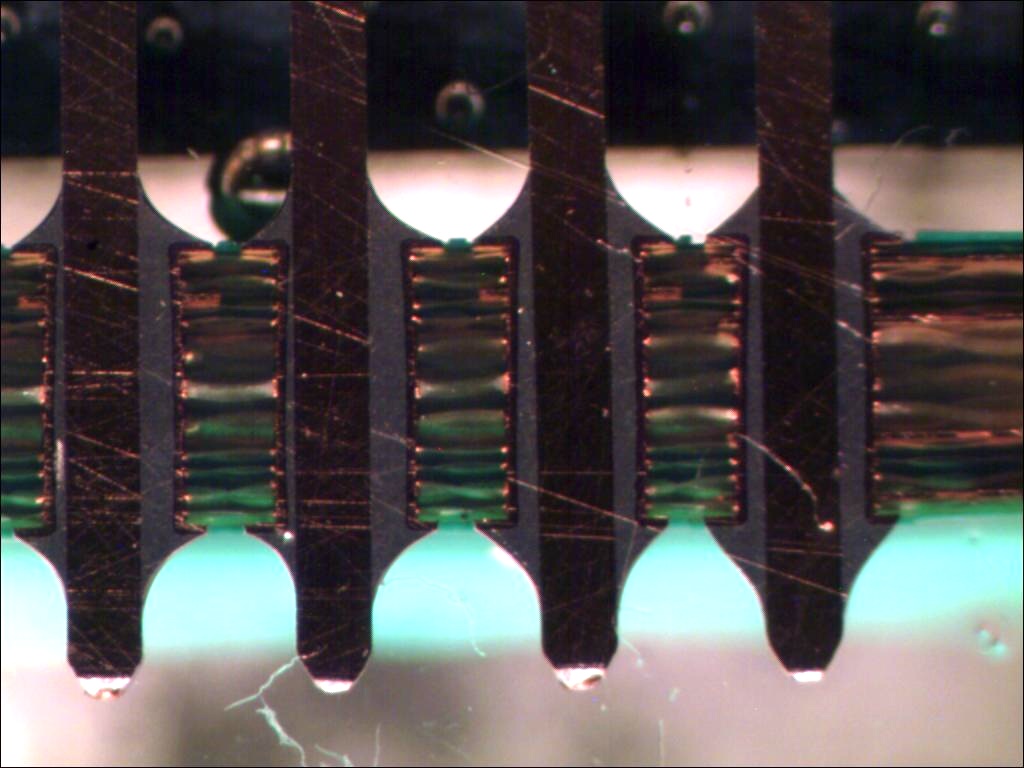
The shorts were most consistent with conductive anodic filament formation through glass-fiber paths debonded from the resin. Resin recession, pad lifting, and solder anomalies indicated thermal overstress that damaged the PTH-region laminate and increased CAF susceptibility.
Why this case matters
CAF risk depends on laminate integrity as well as voltage and moisture. Investigate soldering heat, rework, resin recession, fiber debonding, pad lifting, and internal conductive paths together when resistance changes after handling.
Full evidence reserved for MEMBER and STOREThe complete case includes the evidence sequence, four interpreted figures, alternative explanations, limitations, and practical application guidance.