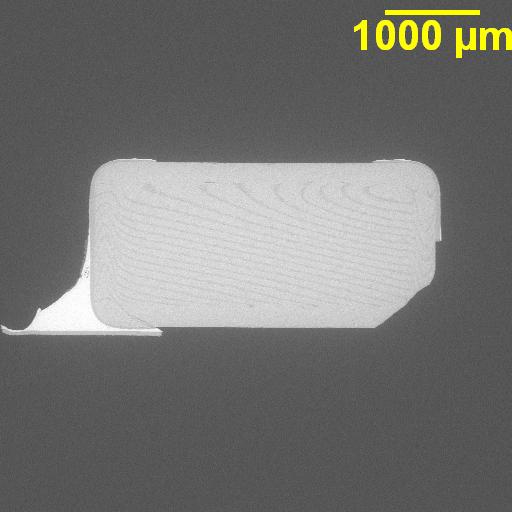
Case 2010 · Public preview
A Fracture-Localized Short Can Distinguish MLCC Flex Damage from Later Troubleshooting Damage
A board-mounted ceramic capacitor was shorted at approximately 0.36 ohm and also contained visible damage from subsequent troubleshooting activity.
Resistance measurementOptical microscopyBSE SEMProgressive microsectioningEDS
What the evidence preview establishes
The capacitor failure was attributed to flex fractures that allowed an electrical short to develop. Its orientation perpendicular to, and very near, a V-scored board edge made bending after assembly, particularly during depanelization, the likely source of the fracture stress.
Why this case matters
Separate the original electrical failure from damage added during troubleshooting. Monitor resistance while approaching a suspected short by progressive sectioning, then relate the fracture geometry to capacitor orientation, board-edge proximity, and the panel-separation process.
Full evidence reserved for MEMBER and STOREThe complete case includes the evidence sequence, 4 interpreted figures, alternative explanations, limitations, and practical application guidance.