Case 1774 · Public preview
Adhesive Voids Can Trap Flux and Enable MLCC Electromigration
Mounted MLCCs exhibited intermittent or low-resistance behavior that disappeared or changed after component removal.
Electrical testingOptical microscopySEMEDSMicrosectioning
What the evidence preview establishes
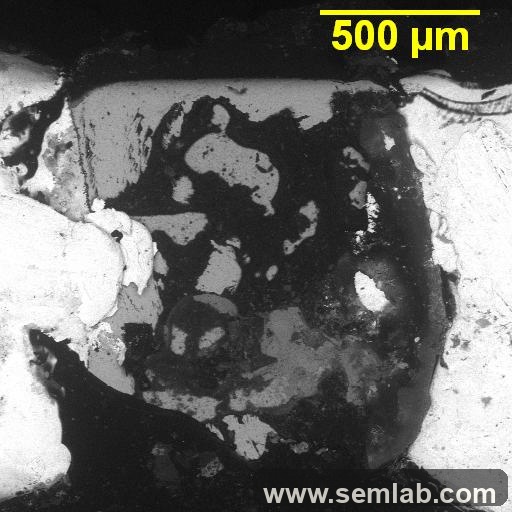
Tin-lead corrosion products containing significant chloride nearly bridged the space between capacitor terminals. Large voids in the mounting adhesive trapped activated flux and provided sheltered paths for corrosion and electromigration; no ceramic fracture or internal construction anomaly explained the behavior.
Why this case matters
An adhesive intended to support a component can create a hidden contamination reservoir when it contains connected voids. Cleaning effectiveness must be evaluated at the component-to-board interface, not only on exposed surfaces.
Full evidence reserved for MEMBER and STOREThe complete case includes the evidence sequence, four interpreted figures, alternative explanations, limitations, and practical application guidance.