Case 1824 · Public preview
Large Die-Attach Voids Can Raise Junction Temperature and Trigger Diode Thermal Runaway
Failed power diodes were internally shorted or severely thermally damaged, while control devices remained electrically functional.
Electrical testingOptical microscopyRadiographyMicrosectioningSEMVoid-fraction estimation
What the evidence preview establishes
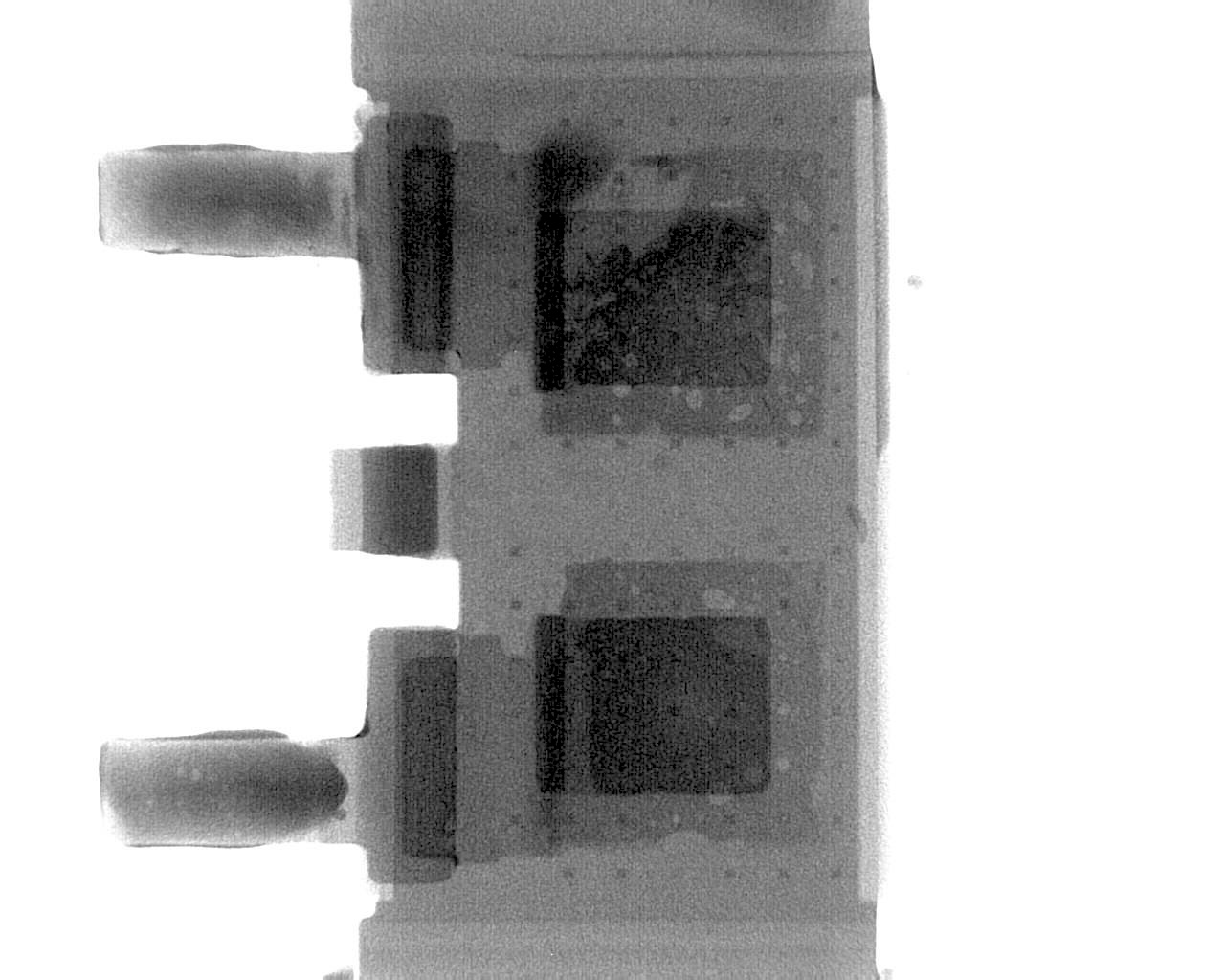
Excessive die-attach voiding increased thermal impedance, elevated junction temperature, and most likely drove thermal runaway followed by internal shorting. Similar voids in functional controls showed that the defect was systemic and could precede catastrophic failure.
Why this case matters
Controls can reveal the initiating defect after failed devices have destroyed their own evidence. Use radiography and cross sections to quantify die-attach voiding, then combine those results with circuit position, current sharing, heat sinking, and thermal history.
Full evidence reserved for MEMBER and STOREThe complete case includes the evidence sequence, four interpreted figures, alternative explanations, limitations, and practical application guidance.