Case 1048 · Public preview
Conductive Salt Residues Can Create Load- and Moisture-Sensitive Leakage Inside a Potted Module
A potted DC-DC converter reportedly lost output under load even though no-load output was within tolerance and radiography did not reveal a causal hard short.
RadiographyElectrical testingControlled excavationOptical microscopySEM and EDS
What the evidence preview establishes
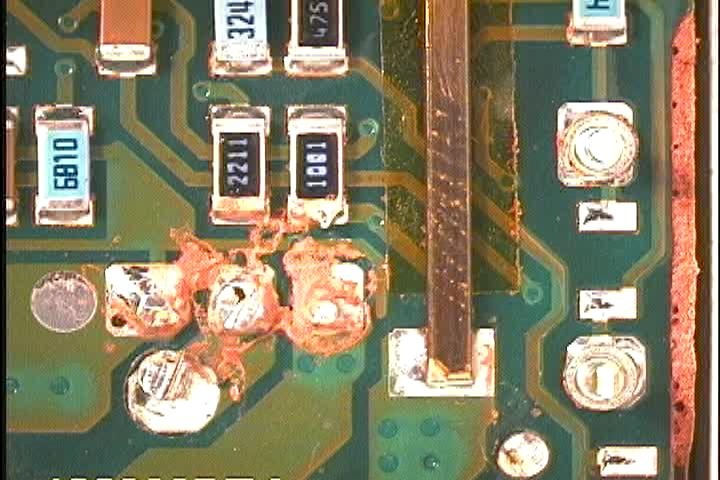
Tin- and lead-bearing salts together with residual flux most likely created variable ionic leakage paths across the internal PWB. Their conductivity was expected to increase with moisture and temperature.
Why this case matters
A potted module can pass no-load testing while ionic residue causes leakage under heat, humidity, or bias. When radiography is inconclusive, expose the board and measure residue resistance over time while correlating the path with its elemental chemistry.
Full evidence reserved for MEMBER and STOREThe complete case includes the evidence sequence, four interpreted figures, alternative explanations, limitations, and practical application guidance.