Case 515 · Public preview
Residual Chloride Can Turn Surface Leakage into Catastrophic Arc Damage
Several circuit boards suffered intermittent or catastrophic electrical damage around adjacent power and ground contacts in a connector region.
Electrical isolationOptical microscopySEMEDSMicrosectioningControl comparison
What the evidence preview establishes
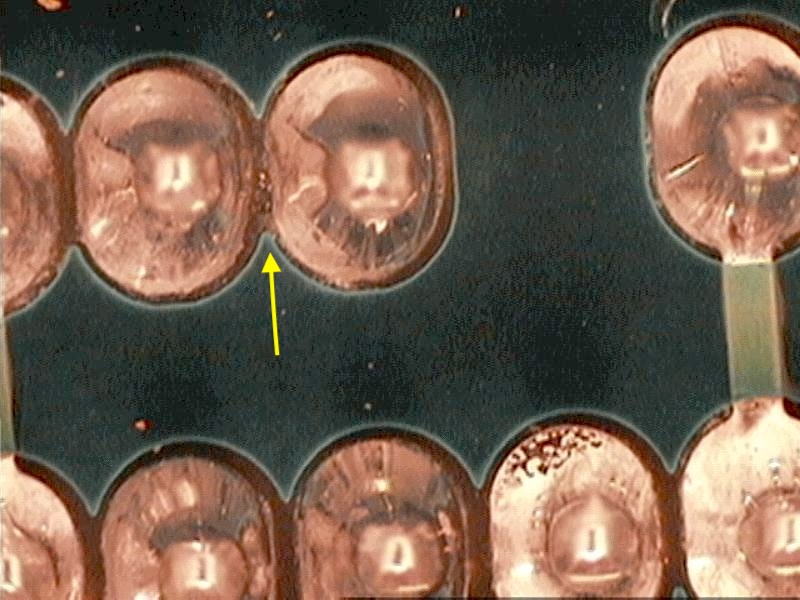
Chloride-bearing flux residue promoted electrochemical migration of tin and lead compounds between oppositely biased connector lands. The resulting conductive path supported leakage and eventually arc-over, producing severe secondary thermal damage.
Why this case matters
Treat flux residues as an electrochemical system, not merely a cosmetic condition. Correlate ionic species, moisture, voltage gradients, spacing, migration deposits, and clean controls before attributing catastrophic damage to the burned component nearest the arc site.
Full evidence reserved for MEMBER and STOREThe complete case includes the evidence sequence, four interpreted figures, alternative explanations, limitations, and practical application guidance.