Case 1594 · Public preview
Sparse Surface Contamination Can Undermine an Otherwise Compatible Adhesive Bond
An adhesive bond separated cleanly from the molded package surface rather than fracturing through the bulk adhesive.
Optical examinationSEMEDSFracture-surface comparisonFTIR spectroscopy
What the evidence preview establishes
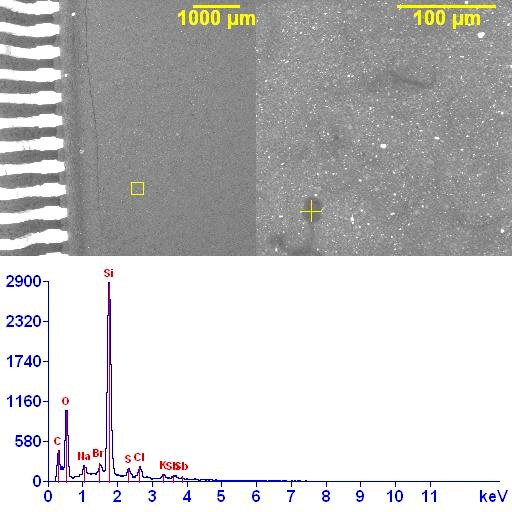
The failure was entirely interfacial at the package surface. Sparse sodium-, sulfur-, chlorine-, and potassium-bearing contamination may have reduced adhesion, although the magnitude of its contribution could not be established.
Why this case matters
A chemically compatible adhesive can still fail at a poorly prepared interface. Examine both sides of the separation, map sparse contamination across and beyond the bond zone, and verify cleaning and cure records before assigning the failure to adhesive identity alone.
Full evidence reserved for MEMBER and STOREThe complete case includes the evidence sequence, four interpreted figures, alternative explanations, limitations, and practical application guidance.